
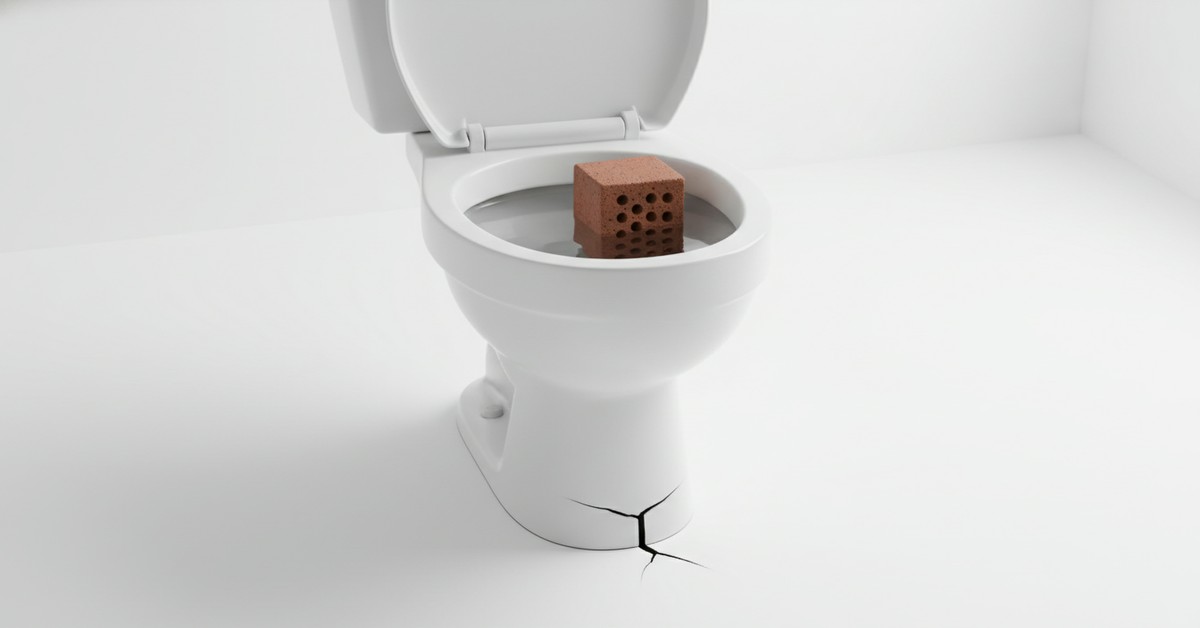
The Impact of Placing a Brick in Your Toilet Tank
For decades, a popular piece of advice for saving water involved placing a brick inside your toilet tank. The idea is simple: the brick displaces water, meaning less water fills the tank and, consequently, less water is used with each flush. It seems like a clever, DIY solution to cut down on utility bills and contribute to water conservation. But what happens when you put a brick inside your toilet tank in practice? The answer is often more complex, and potentially more problematic, than many realize.
The core theory behind this hack holds some truth. By reducing the volume of water in the tank, you do use less water per flush. However, the type of brick and the design of modern toilets significantly influence the outcome. Traditional clay bricks, especially older ones, are not designed for continuous submersion. Over time, these bricks can begin to disintegrate. As a brick breaks down, it can release sediment and mineral particles into the tank water. This debris can then clog the small openings in your toilet's flush valve or even get into the bowl's rim jets, impeding the flush cycle and potentially leading to costly repairs. According to sources like WikiHow, using non-disintegrating alternatives like plastic bottles filled with sand or water is often recommended as a safer displacement method if one insists on this approach.
Furthermore, the physical presence of a brick inside the tank poses several risks. A brick can shift or move, especially during the flushing action, which can cause it to jam against or even break delicate internal components such as the flapper, fill valve, or flush lever mechanism. Such damage can lead to leaks, continuous running water, or a complete failure of the flushing system, counteracting any water savings you might have hoped for. The Environmental Protection Agency (EPA) and its WaterSense program consistently advocate for professionally designed water-saving fixtures over improvised solutions, highlighting the importance of integrated system efficiency.
Modern toilets are also a crucial factor. Many contemporary models are already designed as low-flow or high-efficiency toilets (HETs), using 1.6 gallons per flush (GPF) or even less. These toilets are engineered to achieve an effective flush with a specific, optimized water volume and pressure. Reducing that volume further by adding a brick can compromise the toilet's ability to clear the bowl completely, often necessitating a second flush. This 'double flushing' completely negates any water savings and can actually lead to using more water overall.
Instead of relying on a potentially damaging brick, there are far more reliable and effective methods for water conservation. Consider installing a truly low-flow toilet if your current one is older. For existing toilets, you can explore adjustable flappers that allow you to control the flush volume, or use specialized displacement bags designed for toilet tanks that won't disintegrate or damage components. Regularly checking your toilet for leaks is also paramount; a silent leak can waste hundreds of gallons of water per month without you even knowing it.
In conclusion, while the intention behind placing a brick in your toilet tank is commendable for its focus on water conservation, the practical realities present too many risks. From potential damage to plumbing components to reduced flush efficiency and the release of damaging sediment, the downsides often outweigh any perceived benefits. For effective and lasting water savings, it's best to opt for proven, engineered solutions that protect the longevity and functionality of your plumbing system.